World

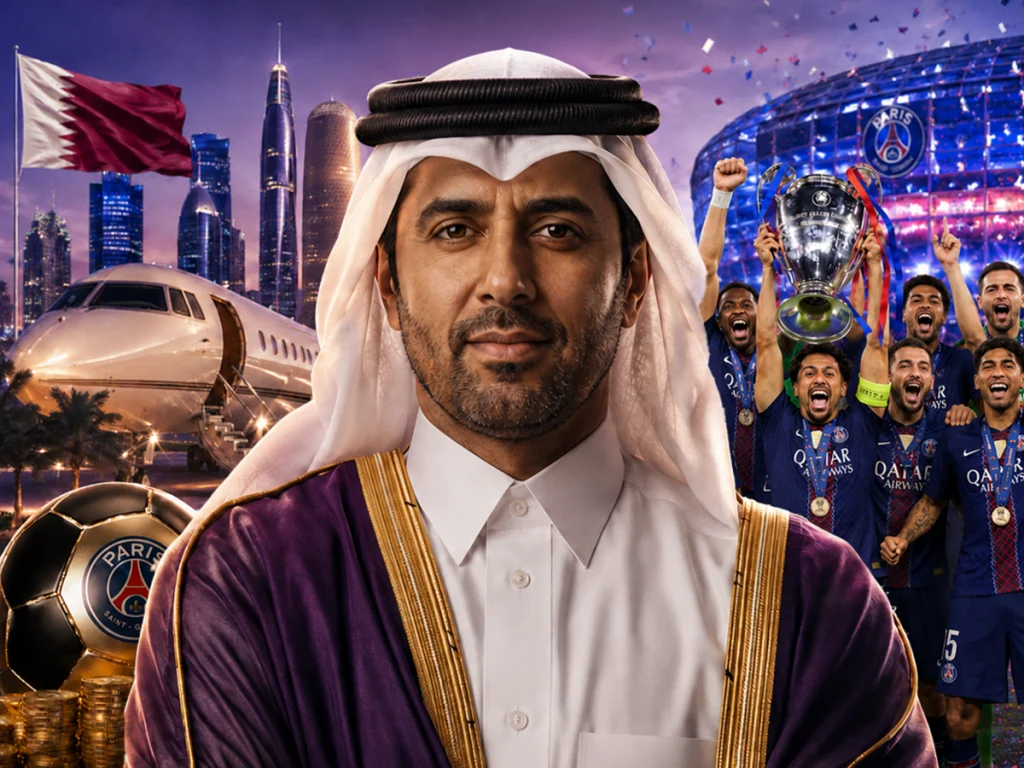
How Qatar Paid €100 Million for a Struggling French Club in 2011, Turned It Into a $5 Billion Empire, and Just Won Back-to-Back Champions League Titles.

World 4 min
psg

By the time Gabriel Magalhães’s penalty sailed over the crossbar at Budapest’s Puskás Aréna on May 30, 2026, the story was complete. PSG had just beaten Arsenal 4-3 on penalties to retain the Champions League – becoming only the second club since 1992 to defend the title, after Real Madrid. Fourteen years of patience, two consecutive European crowns, and a club worth 50 times what Qatar paid for it. This is how it happened.

The purchase nobody took seriously

In June 2011, Qatar Sports Investments acquired a 70% stake in Paris Saint-Germain for approximately €70 million. By early 2012, they bought the remaining 30% for another €30 million – total cost: roughly €100 million for a club that was drifting in mid-table obscurity. Critics called it a vanity project. A small French club purchased by a Gulf state with more money than football knowledge. What followed proved every skeptic wrong.

Nasser Al-Khelaifi was installed as club president almost immediately, and the strategy was clear from day one: build a global brand, not just a football team. Qatar saw PSG the way smart investors see undervalued assets – a sleeping giant in one of the world’s most recognizable cities, available at a fraction of its potential worth.

Stars, spending, and the European ceiling

The signings came fast. Zlatan Ibrahimović, Thiago Silva, David Beckham, Javier Pastore. PSG won Ligue 1 in 2013 and became a regular presence in the Champions League knockout rounds. But winning France and winning Europe are entirely different propositions – and PSG kept finding that ceiling, year after year.

Then came the era of unprecedented spending. In 2017, they broke the world transfer record by signing Neymar for €222 million. Kylian Mbappé followed for €180 million. On paper, PSG had assembled one of the most talented squads in football history. In practice, the results in Europe remained the same. Barcelona’s “Remontada” erased a 4-0 first-leg lead. Manchester United eliminated them on away goals. The more they spent, the more spectacular the failures became.

“Big squads don’t win European trophies. Hungry teams do.”

That lesson took years to learn.

The rebuild nobody expected

The decision that changed everything looked, from the outside, like retreat. PSG allowed Messi, Neymar, and Mbappé to leave – three of the biggest names in world football, gone in the span of two years. The annual wage bill dropped from a peak of $824 million. Pundits declared Qatar’s project a failure.

But under coach Luis Enrique, something shifted. Players like Ousmane Dembélé, Khvicha Kvaratskhelia, Bradley Barcola, and Vitinha built a team around movement and collective pressing rather than individual brilliance. PSG stopped being a collection of brands and started being a football club again.

Back-to-back

In May 2025, PSG beat Inter Milan 5-0 in the Champions League final in Munich. Their first-ever European title, 14 years after Qatar’s takeover. Twelve months later, they defended it in Budapest – winning a tense final 1-1 against Arsenal after 120 minutes, then prevailing 4-3 on penalties when Gabriel’s last kick flew over the bar. Luis Enrique became only the third manager ever to win the Champions League with two different clubs, having previously lifted the trophy with Barcelona in 2015.

The numbers behind the glory

The financial story is just as remarkable. PSG earned €144 million from UEFA for winning the 2024-25 Champions League – one of the largest single-season payments in the competition’s history. Annual revenue now sits at $945 million, ranking fourth in global football behind only Real Madrid, Barcelona, and Bayern Munich. Commercial revenue from sponsors and merchandise alone reached $415 million in 2024-25. The club now has stores in New York, London, Tokyo, Las Vegas, and Doha.

The club’s valuation tells the full story: from €100 million in 2011 to over $5 billion in 2026 – a return of roughly 5,000% in fifteen years. Tourists who used to leave Paris with a Louis Vuitton bag now leave with a PSG jersey. Qatar didn’t just buy a football club. It bought a piece of Parisian identity – and then turned that identity into one of the most valuable sports brands on the planet.
Follow on Instagram
Share
The UK Has Permanently Banned Cigarette

The UK Has Permanently Banned Cigarette Sales for Everyone Born After 2008: How Britain’s Biggest Anti-Tobacco Reform Actually Works.

The United Kingdom has just passed a law that will permanently change an entire generation's relationship with cigarettes. Anyone born on or after January 1, 2009 will never…

swiss

Switzerland has 1 millionaire per 7 people, honor-system shops, and nuclear bunkers for every citizen. Here’s how they actually live:

Switzerland is one of the wealthiest, most stable countries on Earth - but the reasons go far deeper than mountains and watches. The way Swiss society is structured…

Stan Kroenke

The Man Who Quietly Owns More of Global Sport Than Anyone Else in History – And Why His $27 Billion Empire Is Only Getting Bigger in 2026. Here’s how:

Stan Kroenke grew up far from the spotlight. Born in Mora, Missouri, he built his first fortune in commercial real estate - developing shopping centers near Walmart stores,…

kids

Don’t Prepare the Road for Your Child, Prepare Your Child for the Road. Psychology Explains Why Overprotection Quietly Destroys Your Kid’s Future.

Don't prepare the road for your child. Prepare your child for the road. Most parents spend their lives removing every obstacle from their child's path. Earn enough for…

michael

Michael Jackson Woke His Whole Team at 3 AM Just to Record One Song. His Real Reason Had Absolutely Nothing to Do With Music – Here’s the Belief Behind It.

Michael Jackson never called himself a creator. In interviews, he consistently described himself as a receiver - someone through whom music passed, rather than someone who produced it. In his…

elonmusk

The End of Death: Elon Musk’s Neuralink and the Idea That Could Unmake Everything We’ve Built Around the Fact That Humans Die.

Elon Musk has a habit of dropping civilizational grenades in casual conversation. He did it again recently at a summit - not in a peer-reviewed paper, not in…

Tattoos, Melanoma, Cancer, Research, Skincare

Do Tattoos Really Raise Your Cancer Risk? Scientists at Lund University Found a Direct Link Between Tattoo Ink and Melanoma — Here Is What the Data Says.

Tattoos have never been more mainstream. Around one in five Swedes has been tattooed, and for women under 40, that figure climbs above 40 percent. In Western countries…

Salvador Dalí Never Paid His Restaurant Bills

Salvador Dalí Invited Crowds to the Finest Restaurants in New York, Spent Thousands Per Night — and Never Paid a Single Bill. Here Is Exactly How He Did It.

How the surrealist master turned his own name into a currency, and what his dinner-table genius can teach anyone who creates value for a living. Salvador Dalí was…

The Study Method That Japan Quietly

This Unusual Study Method Was Quietly Discouraged in Japan After Students Started Breaking Every Single Academic Benchmark at Scale.

Japan didn't ban the Shadow Study Technique because it failed. They discouraged it because students using it started breaking every academic benchmark in sight - and the system couldn't handle…

richard

Saladin Sent His Personal Doctor to Heal the Man Who Was Trying to Destroy Him. Richard the Lionheart Did the Same. This Is What Real Strength Looks Like.

The Enemy Who Earned More Respect Than Any Ally The Crusades were one of history's bloodiest conflicts. Armies fought in the name of God, slaughtering anyone who stood…

jung

Carl Jung Said Your “Goodness” Is a Shadow That Will Destroy You From the Inside – Here’s the Uncomfortable Truth Behind His Most Controversial Theory

Carl Jung spent decades studying the human psyche, and his most uncomfortable conclusion was this: the part of you that you're most proud of might be the part…

Two ex-SoftBank bankers charge Wall Street $25,000 a day to teach AI. They’re booked two months out and getting richer. Here’s why-

Wall Street Banks Are Paying Two Ex-SoftBank Insiders $25,000 a Day to Learn AI – And the Waitlist of Firms Trying to Catch Up Keeps Growing Every Month.

Global banks are pouring billions into artificial intelligence. Yet most of their employees have no idea how to use it for real work. Two ex-bankers spotted that gap…