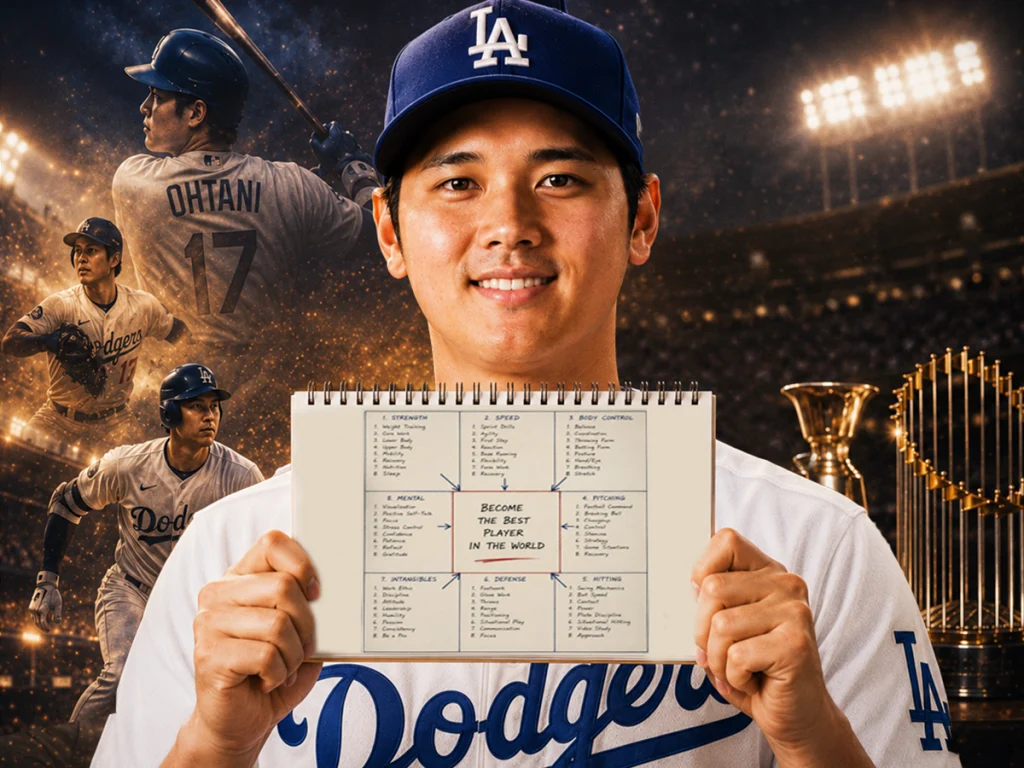
At 17, Shohei Ohtani sat down with a pen and a blank sheet of paper. He wasn’t drafting a business plan or a scientific theory. He was mapping his life, one square at a time, using a method that would eventually reach far beyond the baseball diamond.
Today, that method is a Harvard Business School case study, taught by professor Frances Frei to MBA students who will never throw a single pitch.
A Grid Instead of a Dream
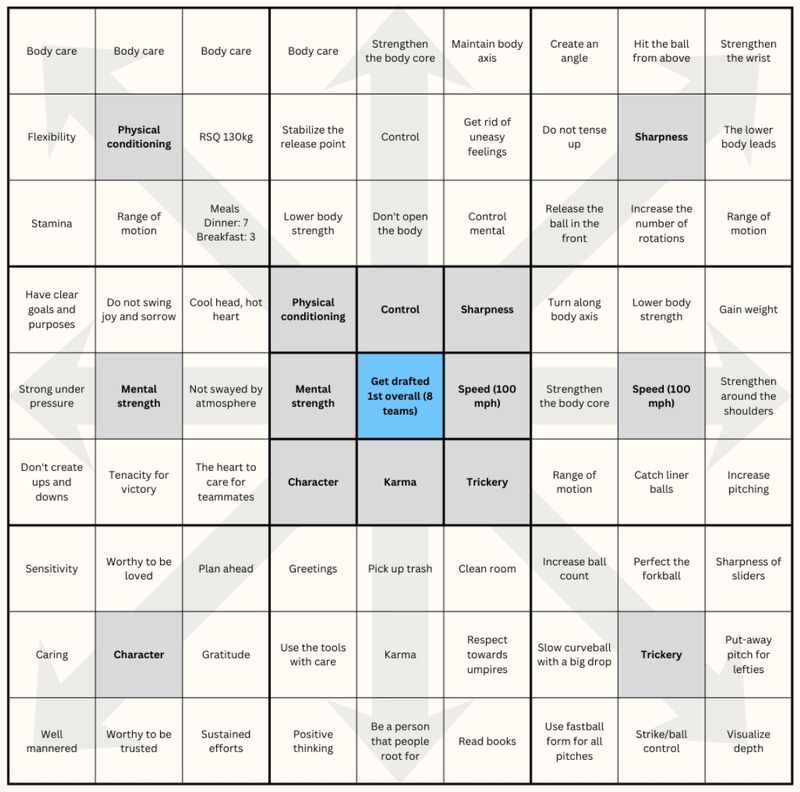
The tool Ohtani used is called the Mandala Chart, sometimes known as the 9×9 grid. It’s part of a broader framework called the Harada Method, created by Takashi Harada, a former physical education teacher in Osaka. Harada developed the approach after observing how schools in Finland taught students to visualize their future instead of simply memorizing facts for tests. He later used it to turn underperforming Japanese school teams into standout achievers, well before Ohtani ever picked up a bat.
The structure itself is deceptively simple:
- One central goal sits in the middle of the grid
- Eight supporting pillars surround that goal
- Each pillar expands into eight specific daily actions
That adds up to sixty-four concrete steps, all pointing back to a single ambition.
What Ohtani Actually Wrote
While a student at Hanamaki Higashi High School, under coach Hiroshi Sasaki, Ohtani placed one goal at the center of his grid: being drafted in the first round by all eight professional teams in Japan. Around that center, he listed eight pillars: physical training, control, a 160 km/h fastball, breaking-ball mastery, mental strength, character, human qualities, and luck.
What stands out isn’t the baseball-specific goals. It’s the ones that aren’t about baseball at all. Under the “luck” category, Ohtani wrote items like picking up trash, greeting people properly, and keeping his room clean. He treated luck not as chance, but as a habit you build through small, repeatable behavior.
As Harvard’s case study on the method puts it, this is the point: character and daily habits form the skeleton of every larger success. A person can chase a massive ambition and still fail if the basics, the discipline, the small unglamorous actions, never get built.
Why Harvard Started Teaching It
Professor Frei didn’t stumble onto the grid by accident. She began using it with her own students, and noticed something: people who filled out the chart didn’t just set goals, they changed how they spent their time. According to Frei, the method works because it bridges two extremes people naturally get stuck between: the big, abstract multi-year ambition, and the tiny, immediate question of what to do today. The grid connects both, giving people what she describes as forward momentum they didn’t have when goals lived only in their heads.
She has since used it with hundreds of people who have no connection to athletics. Entire families have reportedly filled out grids together, turning a personal planning tool into a shared project.
From Locker Rooms to Boardrooms
The same structure that shaped a teenage athlete’s training now shows up in far more ordinary settings, and for a very simple reason: the framework is goal-agnostic. It doesn’t ask what you’re trying to achieve, only that you can name one central goal, break it into eight supporting categories, and turn each category into eight repeatable actions.
Applied to a career, the center might hold a promotion or a business milestone. Applied to finances, it might hold a savings target, surrounded by eight income streams, each broken into eight weekly actions. Applied to health, it might hold a fitness goal, surrounded by categories like sleep, nutrition, and recovery.
The mechanism stays identical in every case: a stretch goal, paired with daily inputs specific enough that progress becomes visible rather than assumed.
The Real Lesson Isn’t Talent
It’s tempting to look at Ohtani’s success, four MVP awards, two World Series titles, a $700 million contract, and assume the grid was incidental to the talent. Harvard’s case study argues the opposite. The chart didn’t create Ohtani’s ability. It created the conditions for that ability to compound daily, in ways that were trackable and repeatable rather than left to motivation or mood.
That’s likely why business students, few of whom will ever play professional sports, are being asked to fill out a version of the same 81-square grid a 17-year-old drew in a Japanese classroom. A big goal without daily action is just a wish taped to a wall. The grid is what turns it into something else entirely: a plan you actually follow.