Why “Good” People Keep Losing: The Uncomfortable Truth Machiavelli Discovered 500 Years Ago That Still Runs the World Today
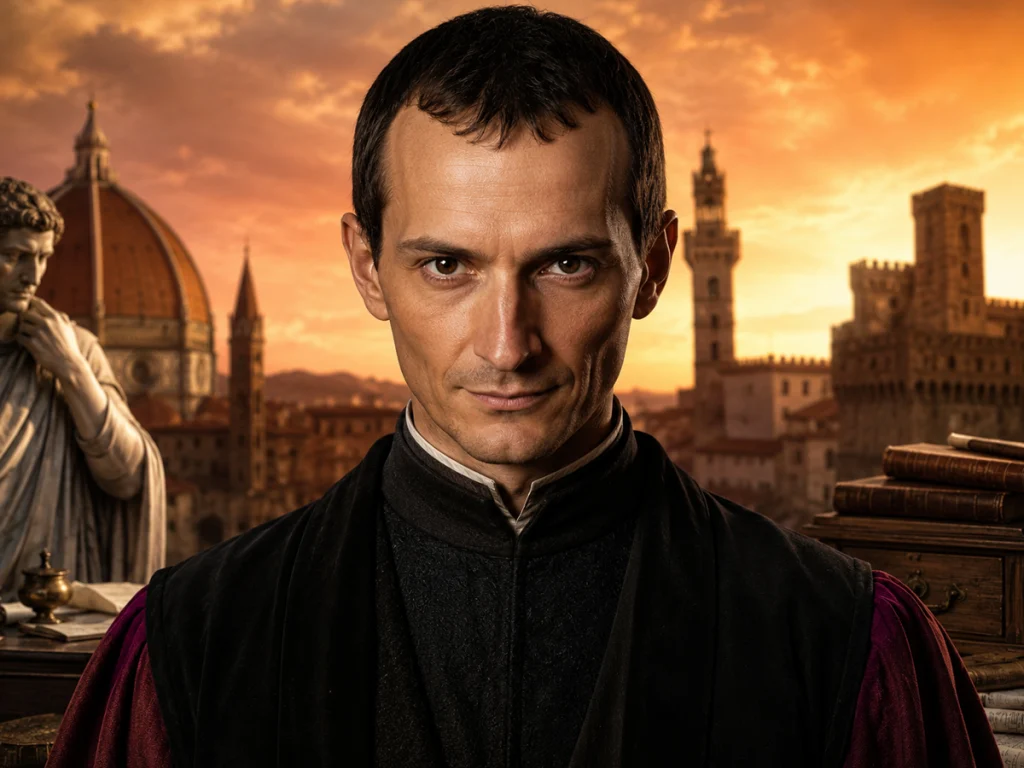
Niccolò Machiavelli wrote The Prince in 1513 while under house arrest, stripped of his political career by the Medici family after the republic he served collapsed. He had spent 14 years as a senior Florentine diplomat, negotiating with kings, popes, and warlords across Renaissance Italy. He watched governments rise and fall at close range. What he observed across all of them was the same uncomfortable pattern: the men who governed purely by virtue were consistently destroyed by those who governed by strategy.
He didn’t write a philosophy book. He wrote a field manual based on what he actually saw.
“It is better to be feared than loved, if you cannot be both.” That single line made him the most controversial political thinker in Western history. Popes banned his work. Monarchs read it in secret. Napoleon kept a personally annotated copy. Cardinal Richelieu studied it. Queen Elizabeth I’s advisors referenced it. For five centuries, the people who held real power quietly read the book that polite society publicly condemned.
The reason The Prince still provokes discomfort in 2026 is that Machiavelli wasn’t prescribing evil – he was describing incentives. He observed that political and social systems reward effectiveness, not moral purity. A ruler who ignores this doesn’t become noble. He becomes a footnote.
The Trap of Performed Virtue
Most people are raised with a specific model of goodness: be kind, avoid conflict, put others first, and the world will respond in kind. It is a reasonable framework for childhood. It becomes a liability in competitive environments.
Machiavelli identified what happens when people carry this model into arenas where others operate differently. They don’t become the most ethical player in the game. They become the most predictable one. And predictability, in any competitive context, is a weakness that strategic opponents exploit without hesitation.
The approval-seeking, the conflict-avoidance, the need to be universally liked – Machiavelli called this weakness disguised as virtue. It feels noble from the inside. From the outside, it signals exactly where pressure can be applied. A person who fears disapproval more than failure will consistently make decisions that protect their reputation over their actual interests. That fear becomes leverage in anyone else’s hands.
The trap is invisible because it feels like the right thing to do. Staying quiet to keep the peace. Tolerating bad behavior to avoid confrontation. Softening a necessary decision to spare someone’s feelings. Each individual act seems reasonable. The cumulative effect is a pattern of self-erasure that others learn to rely on.
What Machiavelli Actually Argued
The popular version of Machiavelli is a cartoon: a cynical advocate for lying, manipulation, and ruthlessness. The actual text is more precise and more interesting than that.
Machiavelli argued that a leader must understand human nature as it is, not as we wish it were. People are primarily motivated by self-interest. They respond to incentives. They respect demonstrated strength more than declared intentions. A prince who governs based on how people should behave will be destroyed by those who govern based on how people actually behave.
“A man who wishes to act entirely up to his professions of virtue soon meets with what destroys him, among so much that is evil.” He wasn’t celebrating that reality. He was documenting it, the way a doctor documents a disease without endorsing it.
The distinction matters. Machiavelli’s realism is not an argument for cruelty. He wrote explicitly that unnecessary cruelty is self-defeating, that a prince who is hated loses everything, that generosity and goodwill are genuine political assets when deployed strategically rather than compulsively. The goal was never to be brutal. The goal was to be effective. Brutality without purpose he considered a sign of weakness, not strength.
What he opposed was the performance of virtue as a substitute for actual competence. Leaders who prioritized appearing good over being effective. Rulers who made decisions based on what would be praised rather than what would work. He called it exactly what it is: vanity dressed as ethics.
The Modern Version of the Same Problem
The pattern Machiavelli observed in Renaissance courts shows up identically in modern organizations, relationships, and careers. The context changes. The dynamic stays the same.
A manager who avoids giving direct feedback to difficult employees doesn’t protect team harmony. He destroys it slowly, while the people who actually perform watch standards collapse around them. Kindness without enforcement isn’t leadership. It’s conflict deferred until it becomes a crisis.
A negotiator who signals flexibility before the conversation starts doesn’t build goodwill. He hands the other party a roadmap to his limits before a single offer has been made. Every concession confirms the strategy. The final agreement reflects not the fair outcome but the boundary of his discomfort.
A leader who postpones every hard decision to wait for consensus doesn’t build trust. He builds uncertainty. People don’t follow someone who needs everyone to agree before acting. They follow someone who knows what they want and moves toward it with clarity. The desire for universal approval is, in practice, a form of paralysis.
Research in organizational psychology supports what Machiavelli observed by watching. A 2023 study published in the Journal of Applied Psychology found that managers rated highest on agreeableness by their peers were consistently rated lowest on effectiveness by their teams. Being liked and being effective are not the same thing. In many competitive contexts, they actively work against each other.
Power Without Morality, Morality Without Power
The most precise formulation of Machiavelli’s actual position is one he never stated directly but implied throughout The Prince: power without morality corrupts, but morality without power collapses.
A leader who accumulates power with no ethical framework becomes destructive. History is full of examples. But a leader who holds ethical convictions with no capacity to enforce them becomes irrelevant. History is equally full of those. The idealist who gets removed from office before any of his ideas are implemented. The honest executive who gets pushed out by people less scrupulous and more strategic. The principled negotiator who walks away with nothing because he wouldn’t play the game.
Virtue that cannot defend itself disappears. This is the core of what Machiavelli actually believed. Not that goodness is useless, but that goodness unarmed is temporary. The people who change systems are rarely the purest. They are the ones who combined genuine conviction with the strategic capacity to survive long enough to act on it.
Abraham Lincoln suspended habeas corpus during the Civil War. Franklin Roosevelt deceived the American public about military preparations before Pearl Harbor. Nelson Mandela endorsed tactics during the anti-apartheid struggle that he later acknowledged crossed moral lines. None of them were simply “good.” All of them understood that surviving long enough to matter required operating in reality, not above it.
The Fifth Lesson
Of all the principles in The Prince, the one that causes the most discomfort is also the most practical: entering any competitive environment naively means subsidizing those who think strategically.
Business, politics, negotiation, hiring, fundraising – none of these arenas are governed by the rules of fairness people learned in childhood. They are governed by incentives, leverage, and the willingness to act when others hesitate. A person who enters these spaces assuming good faith, equal information, and shared standards will consistently be outmaneuvered by those who make none of those assumptions.
This is not cynicism. It is preparation. Knowing that others may not operate by your standards doesn’t require abandoning your standards. It requires building enough strategic capacity to protect them. To enforce them when necessary. To operate effectively in reality without losing the values that make effectiveness worth having.
Machiavelli wrote The Prince hoping it would earn him back his position in Florentine politics. It didn’t. The Medici ignored him. He spent the rest of his life in relative obscurity, writing plays and histories that nobody paid attention to while he was alive.
The man who wrote the most influential manual on power died without it. There is something instructive in that too.
The world doesn’t punish bad people. It punishes unprepared ones. Five hundred years later, that observation remains exactly as uncomfortable – and exactly as accurate – as the day he wrote it down.