The Enemy Who Earned More Respect Than Any Ally
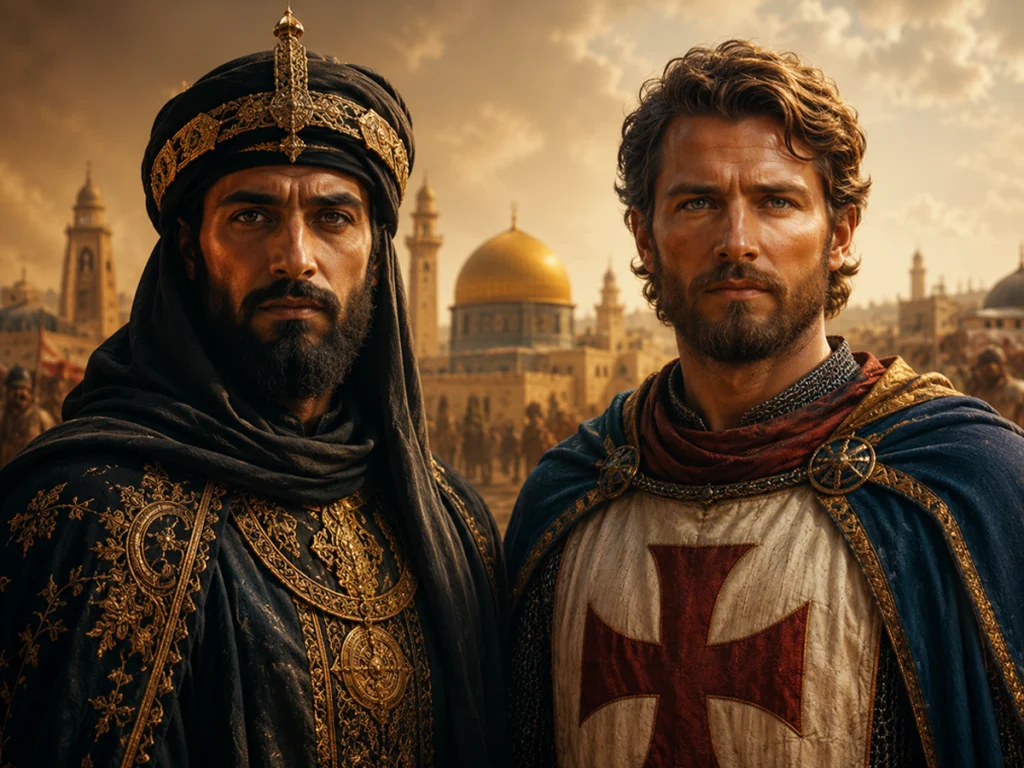
The Crusades were one of history’s bloodiest conflicts. Armies fought in the name of God, slaughtering anyone who stood between them and Jerusalem. Yet inside this chaos, two men on opposite sides quietly built something neither expected: mutual respect so deep it outlasted the war itself.
Richard I of England and Saladin of the Muslim world were sworn enemies for nearly a decade. They commanded opposing armies. They fought over the same city. They never once met face to face. And yet both men, independently, called the other the greatest leader alive.
That says everything.
Actions speak louder than ideology
When Richard’s sword broke mid-battle, Saladin sent him two replacements – a Damascus blade and a personal one. When Richard fell gravely ill during the campaign, Saladin sent his own physician to treat him. When Christian soldiers ran out of food and supplies, Saladin ordered his troops to let them eat.
These weren’t acts of weakness. They were acts of a man who understood a principle most leaders never learn: you are defined not by how you treat your friends, but by how you treat your enemies.
Richard operated by the same code. He honored every agreement made with Saladin, even when breaking them would have been militarily convenient.
“A true enemy is rarer than a true friend. Both require the same thing from you: honesty.”
Mirrors, not rivals
Each man saw in the other what his own side lacked. Saladin saw discipline matched with genuine courage. Richard saw strategic brilliance paired with unbreakable integrity. They were fighting over Jerusalem, but they were also, whether they admitted it or not, studying each other.
Richard even proposed his sister marry Saladin’s brother – an attempt to end the war through union rather than conquest. Saladin declined, but treated the offer with full seriousness. Because he recognized it for what it was: a rare moment of political courage in an era built on pride.
How Saladin died
Saladin captured Jerusalem in 1187 and allowed every Christian to leave alive. He died in 1193 in a modest house with almost nothing to his name. His estate couldn’t cover the cost of his own funeral. No gold reserves. No private treasury.
Just a name that even his enemies refused to dishonor.
Richard was captured, ransomed, and spent his final years fighting minor battles in France. He died in 1199 from a crossbow wound – and reportedly forgave the archer who shot him before he died.
Two men. Opposite faiths. Opposite armies. The same standard of conduct.
What this actually means
Most people never find an enemy worth respecting. They surround themselves with opponents they can dismiss and allies they never truly trust. Saladin and Richard proved something harder to accept: the person across from you in conflict can reveal more about your own character than anyone standing beside you.
Real strength doesn’t need an easy target. It holds its standard even when the cost is high – even when the enemy is watching, even when no one from your own side would know the difference.
They fought each other for years. History remembers them together.