History

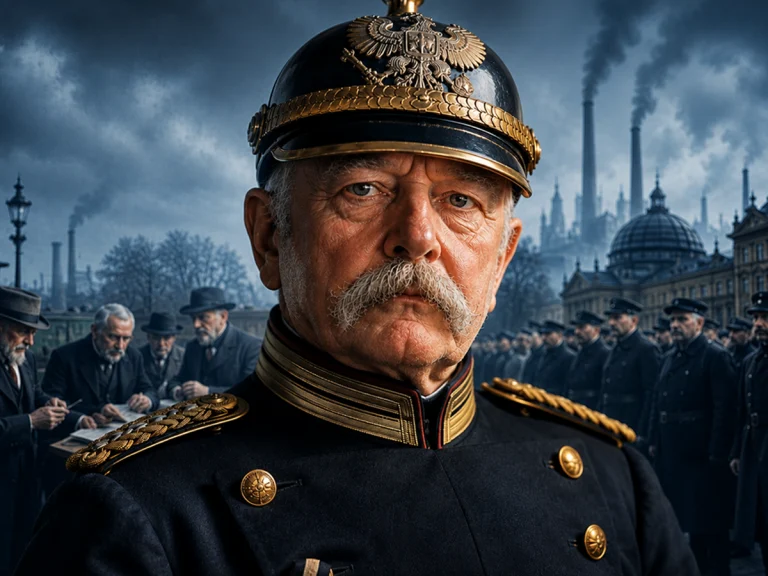
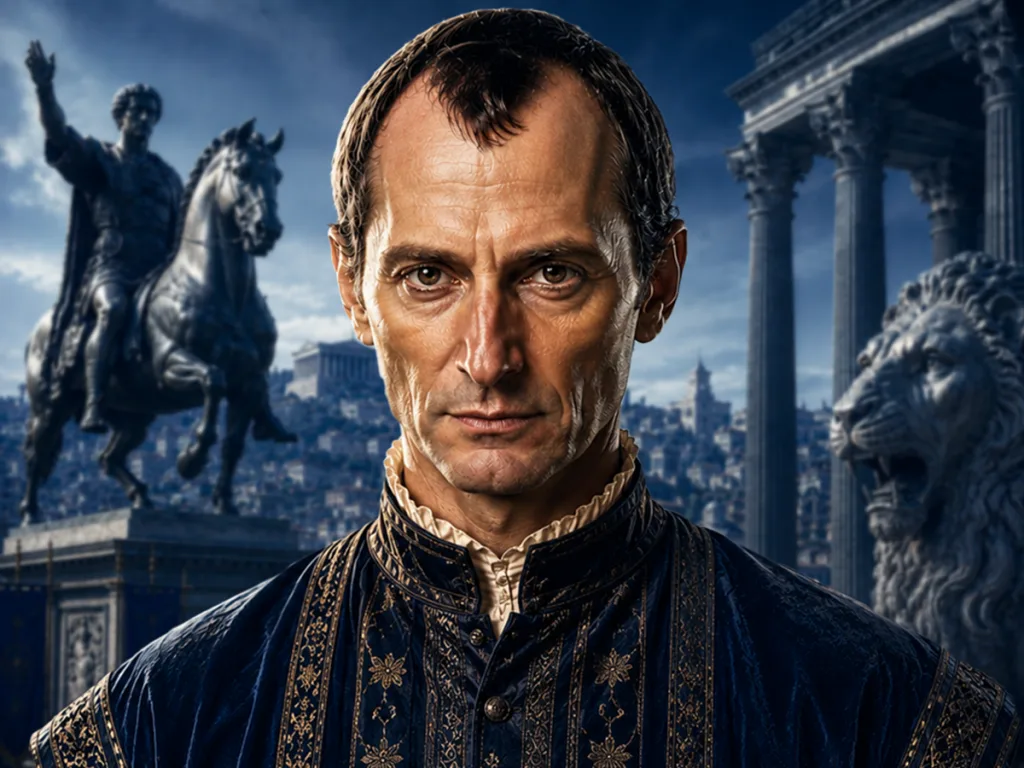
Machiavelli warned: never play fair when others secretly cheat. Morality is a psychological control weapon the weak use to limit the strong. Here’s the rule:

History 3 min
Machiavelli warned: never play fair when others secretly cheat. Morality is a psychological control weapon the weak use to limit the strong. Here’s the rule:

Niccolò Machiavelli wrote “The Prince” in 1513 – a short book that scandalized Europe and never stopped being relevant. Church leaders called it the work of the devil. Kings read it in secret. Five centuries later, it sits on the shelves of CEOs, politicians, and strategists worldwide. The reason is simple: Machiavelli said out loud what everyone in power already knew but refused to admit.

His core argument was brutal. In a world where others cheat, playing fair makes you the easiest target in the room.Morality sounds powerful in theory. In practice, it functions like a leash – designed by the weak to slow down the strong. The people preaching rules the loudest are usually the ones losing without them. Rules exist to protect those who benefit from the current order. Those who built that order rarely followed the same rules themselves.

Clinging to principles while enemies plot against you is not virtue. It is generosity toward your opponents. You hand them the exact tools they need to dismantle you, and you call it integrity. Machiavelli called it something else: a fast path to irrelevance. Awareness without principle is dangerous. But principle without awareness is simply slow, polite surrender dressed up as nobility.

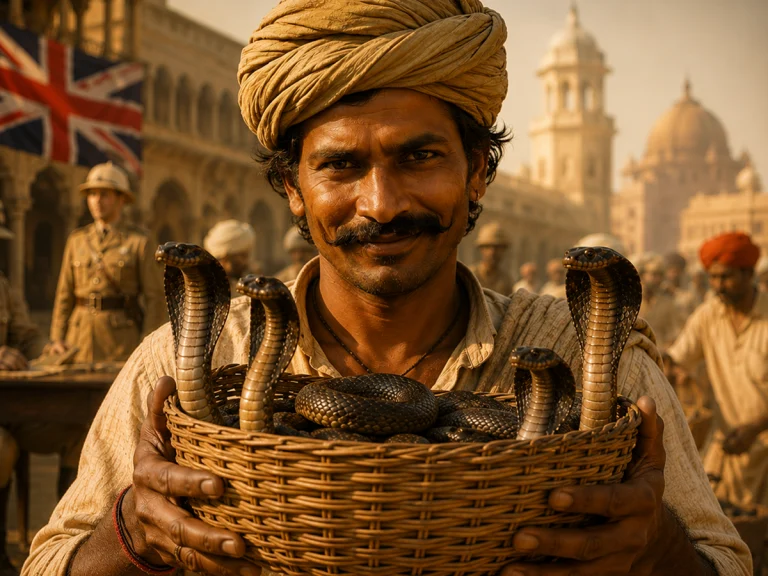
History has never been kind to the honorable loser. The winner gets statues, biographies, and the right to rewrite exactly what happened and why. The loser gets lectures about ethics from the people who defeated him. Every great empire, every dominant dynasty, every market-defining company was built during a period when the rules were either absent, ignored, or actively rewritten by the people doing the building. Standard Oil, the Roman Empire, the British East India Company – none of them rose to dominance by playing within boundaries others set for them.

Moral debates only begin after power is already secured. This is not a coincidence. Before the crown is won, there is no audience for ethics. There is only competition – raw, asymmetric, and indifferent to fairness. The moment power is consolidated, the victors introduce moral frameworks that conveniently protect what they now own. They criminalize the very tactics that built their position, ensuring no competitor can use the same path to challenge them.

Once the crown is won, nobody questions the methods seriously. What looked like deception during the climb becomes bold strategy in the history books. What looked like ruthlessness becomes decisive leadership. Success automatically erases every uncomfortable question it created along the way. This is why the same behavior gets called visionary in a billionaire and criminal in someone who failed trying.

Machiavelli was not writing a manual for villainy. He was describing reality as he observed it – in Florence, in Rome, in every court and council he studied. His insight was that effectiveness and morality operate on separate tracks, and confusing the two costs you the game. The most consequential empires, companies, and careers in history were built by the most effective players, not the most honorable ones. He didn’t invent this rule. Power worked this way long before he was born. Machiavelli simply had the clarity and the courage to write it down – and five hundred years later, the people who matter most still read every word.
Follow on Instagram
Share
richard

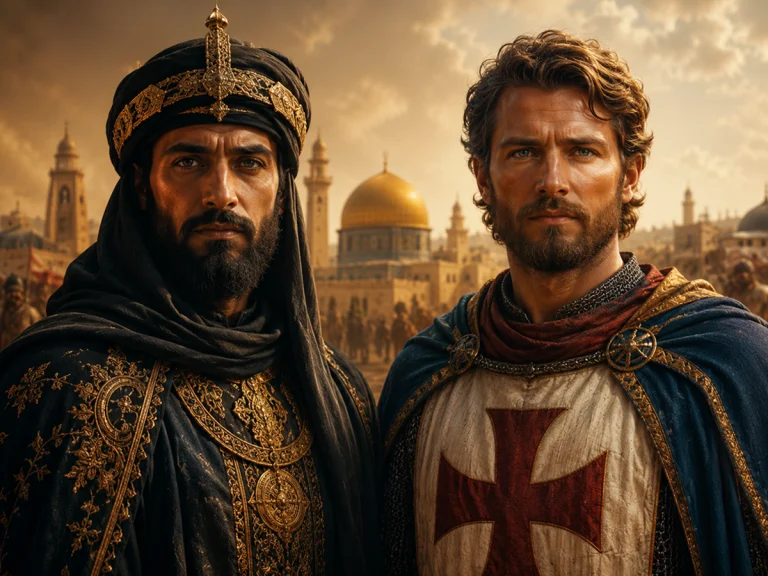
Saladin Sent His Personal Doctor to Heal the Man Who Was Trying to Destroy Him. Richard the Lionheart Did the Same. This Is What Real Strength Looks Like.

The Enemy Who Earned More Respect Than Any Ally The Crusades were one of history's bloodiest conflicts. Armies fought in the name of God, slaughtering anyone who stood…

Romans built their empire on 3 private psychological laws that eliminate people-pleasing. Apply them today and you’ll stop being emotionally convenient.

Romans built their empire on 3 private psychological laws that eliminate people-pleasing. Apply them today and you’ll stop being emotionally convenient.

Law 1: Nemo plus iuris - you cannot give what you do not have. No time, no energy, no bandwidth - and you're still saying yes to everyone. That's…

Socrates said democracy was dangerous. Not because he loved tyrants. Because he watched emotional crowds vote for comfort over truth.

Socrates said democracy was dangerous. Not because he loved tyrants. Because he watched emotional crowds vote for comfort over truth.

Socrates believed democracy had a fatal flaw built into its foundation. It treats every opinion as equal - the expert and the ignorant get the same vote. He…

Stan Kroenke

The Man Who Quietly Owns More of Global Sport Than Anyone Else in History – And Why His $27 Billion Empire Is Only Getting Bigger in 2026. Here’s how:

Stan Kroenke grew up far from the spotlight. Born in Mora, Missouri, he built his first fortune in commercial real estate - developing shopping centers near Walmart stores,…

kids

Don’t Prepare the Road for Your Child, Prepare Your Child for the Road. Psychology Explains Why Overprotection Quietly Destroys Your Kid’s Future.

Don't prepare the road for your child. Prepare your child for the road. Most parents spend their lives removing every obstacle from their child's path. Earn enough for…

michael

Michael Jackson Woke His Whole Team at 3 AM Just to Record One Song. His Real Reason Had Absolutely Nothing to Do With Music – Here’s the Belief Behind It.

Michael Jackson never called himself a creator. In interviews, he consistently described himself as a receiver - someone through whom music passed, rather than someone who produced it. In his…

elonmusk

The End of Death: Elon Musk’s Neuralink and the Idea That Could Unmake Everything We’ve Built Around the Fact That Humans Die.

Elon Musk has a habit of dropping civilizational grenades in casual conversation. He did it again recently at a summit - not in a peer-reviewed paper, not in…

psg

How Qatar Paid €100 Million for a Struggling French Club in 2011, Turned It Into a $5 Billion Empire, and Just Won Back-to-Back Champions League Titles.

By the time Gabriel Magalhães's penalty sailed over the crossbar at Budapest's Puskás Aréna on May 30, 2026, the story was complete. PSG had just beaten Arsenal 4-3 on…

Tattoos, Melanoma, Cancer, Research, Skincare

Do Tattoos Really Raise Your Cancer Risk? Scientists at Lund University Found a Direct Link Between Tattoo Ink and Melanoma — Here Is What the Data Says.

Tattoos have never been more mainstream. Around one in five Swedes has been tattooed, and for women under 40, that figure climbs above 40 percent. In Western countries…

Salvador Dalí Never Paid His Restaurant Bills

Salvador Dalí Invited Crowds to the Finest Restaurants in New York, Spent Thousands Per Night — and Never Paid a Single Bill. Here Is Exactly How He Did It.

How the surrealist master turned his own name into a currency, and what his dinner-table genius can teach anyone who creates value for a living. Salvador Dalí was…

The UK Has Permanently Banned Cigarette

The UK Has Permanently Banned Cigarette Sales for Everyone Born After 2008: How Britain’s Biggest Anti-Tobacco Reform Actually Works.

The United Kingdom has just passed a law that will permanently change an entire generation's relationship with cigarettes. Anyone born on or after January 1, 2009 will never…

The Study Method That Japan Quietly

This Unusual Study Method Was Quietly Discouraged in Japan After Students Started Breaking Every Single Academic Benchmark at Scale.

Japan didn't ban the Shadow Study Technique because it failed. They discouraged it because students using it started breaking every academic benchmark in sight - and the system couldn't handle…